In this article
“Perhaps I should have my manicure removed to let my nails breathe for a while.” You may have thought this yourself or heard someone suggest it.
Nails do not need exposure to air to “breathe”. That does not mean a break is never useful. It can be a chance to reduce further treatments, care for your nails and watch for changes — rather than supply oxygen to the nail plate.
Why don’t nails need to “breathe”?
The visible nail plate consists of dead, keratinised cells. It does not breathe like living tissue and does not need to be uncovered to absorb oxygen from the air.
The nail matrix, where the new plate forms, and the nail bed beneath it are living tissues. They receive oxygen and nutrients through the blood.
Removing gel polish or builder gel therefore does not give nails a new “supply of oxygen”. If their condition improves during a break, there is another explanation: care, fewer injuries or the gradual growth of the damaged area towards the tip.
If it isn’t about breathing, why take a break?
A break can reduce contact with products and the repeated steps involved in applying and removing them. It also gives you a chance to look at the whole nail plate without colour covering it.
The American Academy of Dermatology recommends going without polish for one to two weeks or longer between gel manicures, along with regular moisturising. This advice is about protecting nail condition, not allowing nails to “breathe” (AAD advice on gel manicures).
It helps to separate these two ideas: nails needing to breathe is a myth, but taking a break from treatments can still be worthwhile.
Can a break rebuild a thinned nail plate?
If part of a nail has been overfiled or peeled away with the product, leaving it bare will not replace the missing layers.
Hand cream and cuticle oil can help reduce dryness and improve comfort. They cannot restore thickness removed by filing. The damaged area has to grow out gradually.
A week or two without a coating therefore does not mean every nail will be ready for another treatment. The skin may look better before the affected part of the nail plate has grown out.
I explain this process in more detail in the article on natural nail growth and why a damaged nail plate needs time.
When should you postpone another manicure?
Changes to a nail should not be covered with colour simply because you prefer how it looks with a coating.
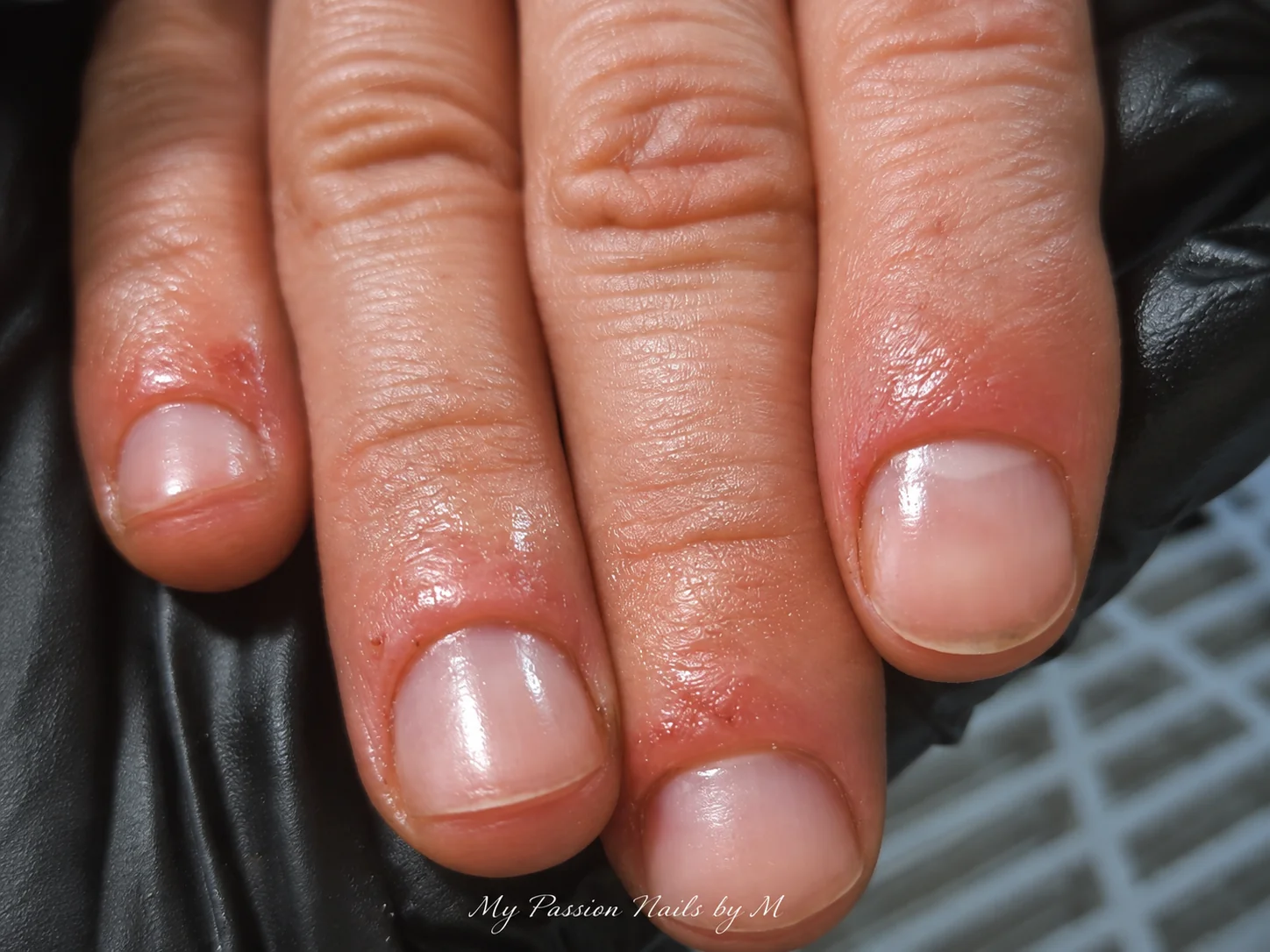
Pain, redness, swelling, a rash, separation of the nail plate from the nail bed or an unexplained colour change are reasons to postpone the treatment and seek medical advice. This is especially important if the symptoms persist or worsen.
Another layer of builder gel should not be treated as a solution for a visibly damaged nail plate either. The product may hide a change, but it does not explain its cause or replace treatment.
Is removing the product and waiting enough?
How the product is removed matters too. Peeling it off, scraping forcefully or filing excessively can cause further damage to the plate. Starting a break this way will not undo those injuries.
After removal, keep your nails at a comfortable, shorter length, use hand cream regularly and wear gloves when washing dishes or cleaning. There is no need to buff the nails heavily to achieve a perfectly smooth surface straight away.
If the plate feels more flexible after removal, you may also find the earlier article helpful: why nails feel soft after removing gel polish or gel.
Nails do not need a break in order to breathe. They may, however, need fewer treatments, protection and sometimes medical care. The decision should reflect their actual condition, rather than the idea of “giving the nail plate oxygen”.