In this article
- What does “lifting” actually mean?
- How does the product adhere to the nail?
- Can lifting be caused by the way the manicure was done?
- Why does the same product work well for one person but not another?
- What can happen during everyday activities?
- Does the location of the lifting reveal what went wrong?
- Why shouldn’t you glue lifting product back down?
- What should you do if you notice lifting?
Your manicure looks good for a while. Then, one day, you notice the product starting to lift near the cuticle or along the side of a nail. It might catch on your hair, or a paler patch may appear beneath the coating. Why does this happen?
Lifting can have several causes. Nail preparation, application and curing, the choice of product and everyday activities all play a part. The appearance of the affected area alone is not enough to identify a single cause.
What does “lifting” actually mean?
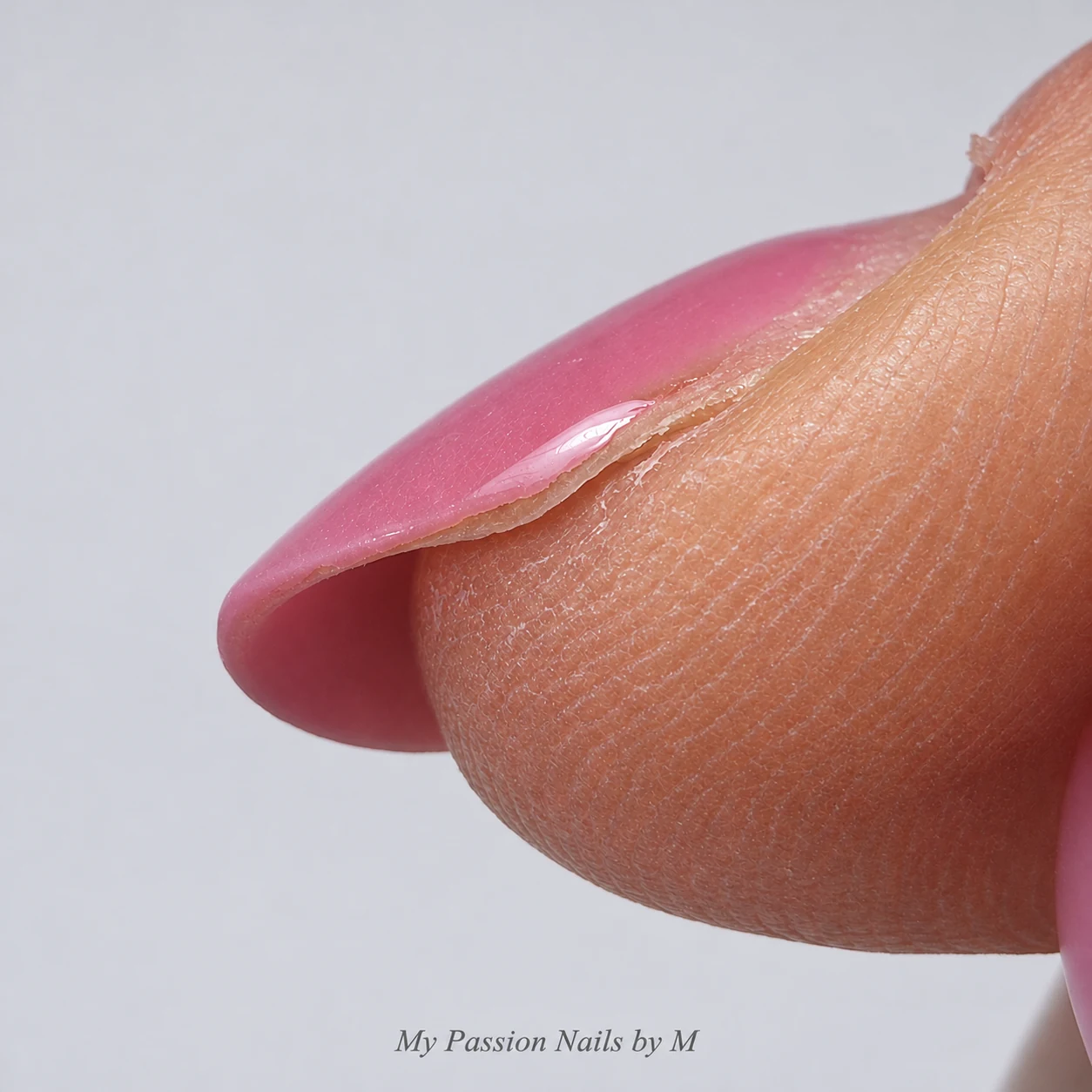
Lifting is when gel polish or builder gel stops adhering to part of the natural nail. A gap forms between the product and the nail plate.
Air does not simply work its way beneath firmly attached product and pull it away. Adhesion is lost first; the resulting gap may then become visible as a paler area.
Product lifting should be distinguished from the natural nail separating from its nail bed. These are different situations, although both can change the appearance of the nail.
How does the product adhere to the nail?
The product needs a properly prepared surface. Dust, traces of cosmetics or skin adhering to the nail plate can interfere with adhesion.
Imagine sticking a label onto a dusty box. It may stay in place for a while, but in some areas it sticks to the dust rather than the box itself. Nail product adhesion is more complex, but this comparison helps explain why preparation matters.
Thorough preparation does not mean aggressive filing. It should be gentle, suited to the condition of the nail and consistent with the instructions for the product system. Excessively thinning the nail plate is not a way to improve wear.
Can lifting be caused by the way the manicure was done?
Yes. Surface preparation, product touching the skin, layer thickness and correct curing in a lamp suited to the product can all affect adhesion.
The structure of the enhancement matters too. Product should be distributed to suit the nail’s length and shape, as well as the stresses it will be exposed to.
Lifting should therefore not automatically be blamed on the client. Equally, the fact that product has lifted does not tell us which stage of the treatment was responsible without looking at the whole situation.
Why does the same product work well for one person but not another?
Natural nails vary in thickness, flexibility, length and their condition before treatment. A thin nail that bends easily behaves differently from a short, more rigid nail.
If the nail and its coating respond differently to stress, maintaining their bond can be more difficult. The product and structure therefore need to suit the individual nail plate, rather than using one solution for everyone.
Previous damage matters as well. An excessively thinned or peeling surface does not become a stronger foundation simply because it is covered with product. More product does not always mean better wear.
What can happen during everyday activities?
Prying open lids, scraping off labels or knocking the tips of your nails puts stress on the coating. A single snag may be obvious, while small, repeated stresses are easy to overlook.
The longer the nail, the greater the leverage that pressure on its tip can create. Length should therefore suit everyday activities as well as the desired appearance.
As the nail grows, the position of the product relative to its base changes too. A manicure that still looks attractive may no longer have the same distribution of support as it did when it was first applied. Regular maintenance or removal matters even when you still like the colour.
Does the location of the lifting reveal what went wrong?
It can offer a clue, but not a definite answer. Lifting near the cuticle, at the side or along the free edge calls for a look at both the application and the stresses the nail has experienced.
It helps to know when the change appeared, whether one nail or several are affected, and whether there was a knock or snag beforehand. The condition of the natural nail before treatment is also relevant.
A photograph alone cannot always establish the cause. Similar-looking areas can develop in different circumstances, including during product removal.
Why shouldn’t you glue lifting product back down?
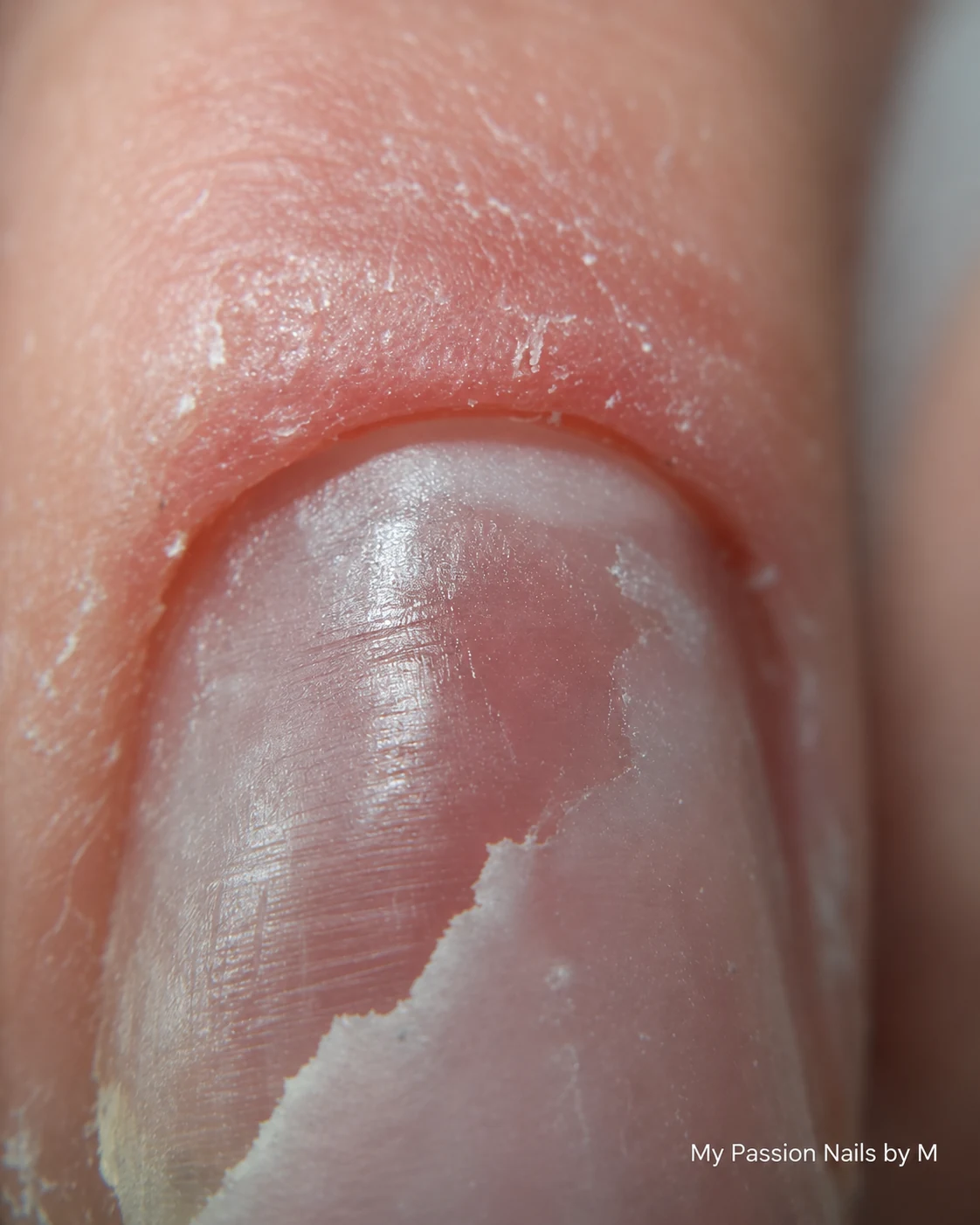
When a piece starts to lift, it can be tempting to press it down and glue it back into place, or cover it with another layer of top coat. This does not address the loss of adhesion or allow the area beneath the product to be assessed.
Do not peel the product off either. Surface layers of the natural nail may come away with it, leaving the nail plate thinner and more sensitive.
The lifted area needs to be assessed and the product removed appropriately. The method depends on the product and the condition of the nail. Aggressively filing the natural nail plate will not solve the problem.
What should you do if you notice lifting?
Do not pry up the loose edge or keep testing how firmly it is attached. Contact your nail technician rather than waiting for the lifted area to grow.
It helps to share a few details:
- When you noticed the change and how long it has been since your appointment.
- Whether one nail or several are affected.
- Whether there was a knock or snag beforehand.
- Whether you have any pain or other unusual changes.
A clear photograph can help explain the situation, but it cannot always replace an assessment in person. If there is pain, swelling, redness, unusual discolouration or separation of the natural nail from its nail bed, seek medical advice.
Lifting is a sign that something needs attention, not an instant answer to who made a mistake. The priority is to identify the cause and decide what to do next with the condition of the natural nail in mind.