In this article
- Gel polish: a thin, flexible coating
- How long should you wear gel polish?
- Builder gel: a product for reinforcement and structure
- How long should you wear builder gel?
- Should you wait until gel polish starts lifting?
- Are gel polish and builder gel removed in the same way?
- Builder gel underneath, gel polish colour on top
- Why I do not offer nail extensions in my salon
- What will suit your nails?
“Gel polish or builder gel?” It can seem like a simple question until you have to choose a service when booking. In photos, the two finishes often look alike. They may have the same colour, shine and shape, but the product on the nail behaves differently.
Gel polish creates a thin, flexible coating, while builder gel provides greater reinforcement and gives the nail a supporting structure. This difference affects the choice of length, how the nails wear and when to book your next appointment.
Gel polish: a thin, flexible coating
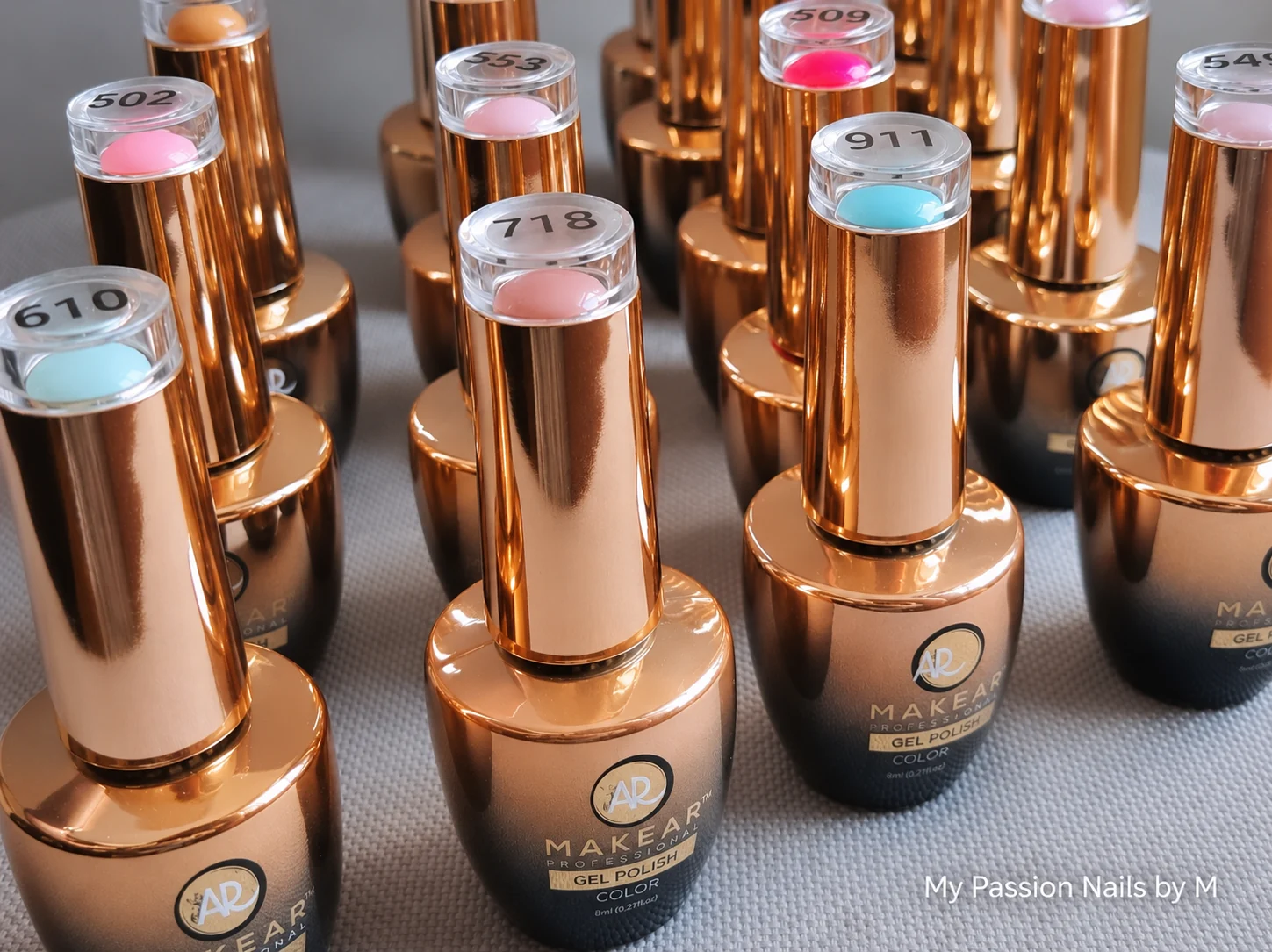
Traditional gel polish usually has a more fluid consistency than builder gel. It is applied in thin layers and cured in a suitable lamp. It does not simply air-dry like ordinary nail polish.
Once cured, it forms a flexible coating that, to some extent, moves with the natural nail. This means that when the nail plate bends slightly, the product covering it needs to follow that movement.
That is why a traditional, thin gel polish application works best on short, healthy nails that do not need substantial reinforcement. Its main purpose is to provide colour and a well-groomed finish.
It is not a product for building long nails. If the natural nail plate is long, thin and bends easily, a coating of colour alone may not provide enough support. Cracks or chips can then appear.
Describing it as a “soft material” does not mean that properly cured gel polish remains soft or can be moulded. It refers to its greater flexibility compared with a hard builder gel.
There are also gel polish base coats designed to add structure, but their capabilities differ from those of a traditional, thin application. Not every service called “gel polish” therefore involves exactly the same technique.
How long should you wear gel polish?
With a traditional gel polish manicure, it is sensible to plan a fresh application after around two weeks. The aim is not to wait until the colour starts coming off, but to assess the condition of the nails and product regularly.
However, two weeks is not an absolute limit for every available system. Wear time depends on the particular product, the condition of the natural nail plate and everyday activities.
If you frequently soak your hands, work with detergents or use your nails to pry things open or scrape surfaces, the manicure may lose its neat appearance or adhesion sooner.
Why does frequent soaking matter?
The natural nail plate absorbs water and becomes more flexible, then dries out again. When your hands are frequently immersed for long periods, this cycle repeats, placing stress on the bond between the nail and the product.
A thin gel polish application may therefore be unsuitable for someone who often works with their hands in water without protection, especially if their nails bend easily.
Normal handwashing does not rule out gel polish. What matters is limiting prolonged soaking and wearing gloves for cleaning and washing up. This also applies to nails reinforced with gel.
Builder gel: a product for reinforcement and structure
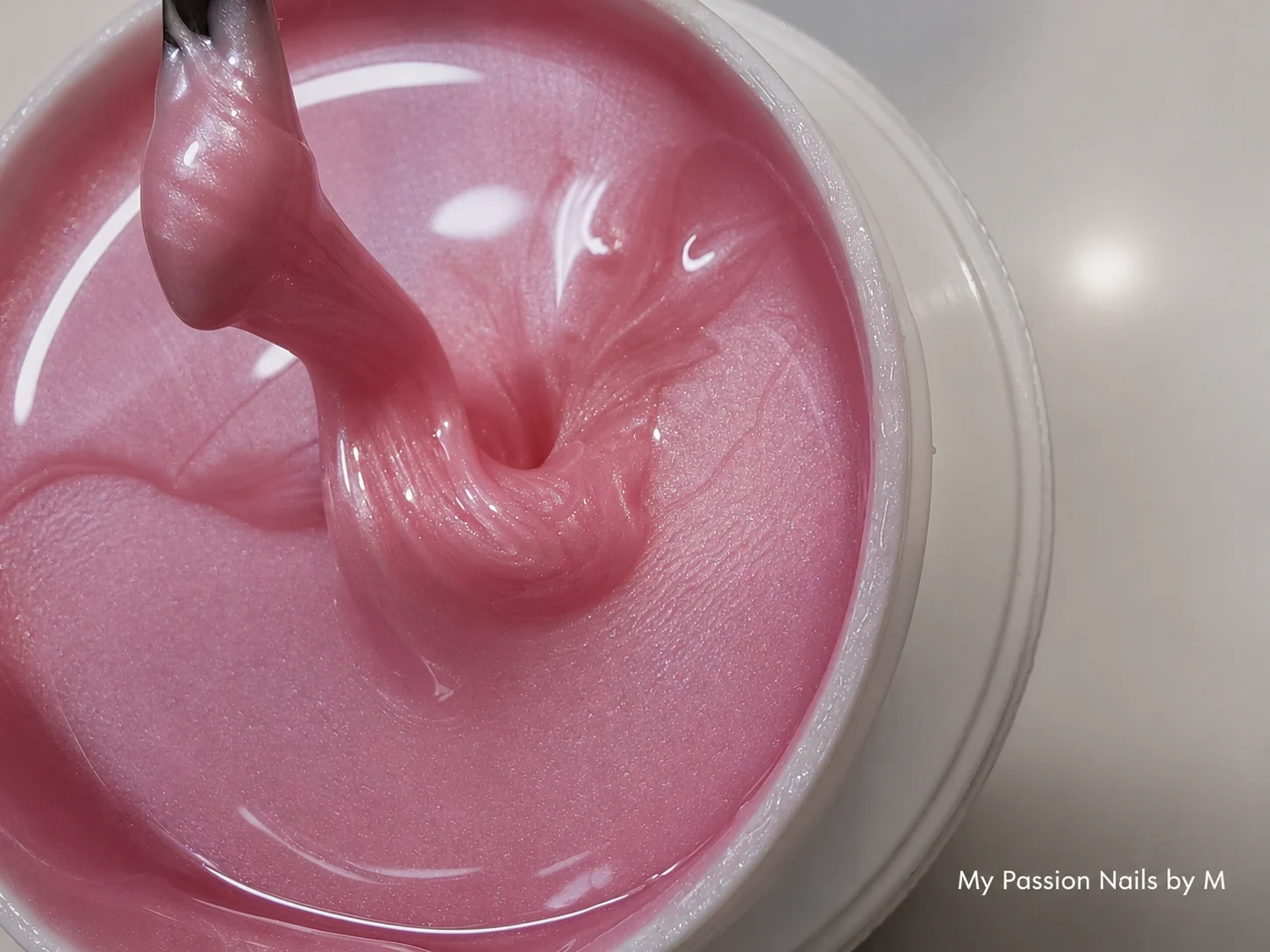
Builder gel usually has a thicker consistency than gel polish. As it cures in the lamp, it forms a polymer structure: put simply, a linked network that gives the material its properties.
Hard builder gel can make the nail more rigid, shape it and allow product to be placed where reinforcement is needed.
It can be used to:
- reinforce the natural nail plate;
- even out its shape and surface;
- rebuild a missing part of the free edge, if the condition of the nail allows;
- create nail extensions.
Gel can be helpful for nails that break easily or need more support at the chosen length. It is sometimes used on bitten nails, but whether a treatment is appropriate depends on the condition of the nail plate and surrounding skin.
A weakened nail is not always a nail that should be covered with gel. Pain, broken skin or separation of the nail plate from its bed needs to be assessed first. Gel does not treat the nail or replace lost layers of the natural nail plate: it provides mechanical reinforcement while it is being worn.
How long should you wear builder gel?
A builder gel overlay usually provides suitable reinforcement for longer than a traditional, thin gel polish application. An infill is most often scheduled after three to four weeks, sometimes sooner.
Gel may still be firmly attached after five weeks. That does not mean it is a good idea to deliberately delay your appointment for that long.
The nail grows and the product moves forward with it. A gap appears at the base, the nail becomes longer and the area built to provide support shifts position. An infill therefore involves more than filling the gap near the cuticle: the whole structure needs to be rebalanced.
Just because the gel is still attached does not mean the nail still has the right support.
Should you wait until gel polish starts lifting?
No, and the same applies to builder gel.
Lifting should not be the signal you use to decide when to book your next appointment. If the product lifts, cracks or starts catching on things, contact your nail technician sooner.
Do not peel it off or try to glue it back down. Pulling the product off can also remove surface layers of the natural nail.
Are gel polish and builder gel removed in the same way?
Not always. Many traditional gel polish systems can be soaked off with an acetone-based remover, following the manufacturer’s instructions. Product can also be filed off if that method is suitable for the system and is carried out by someone with the right skills.
Hard builder gel does not dissolve in acetone. It is removed mechanically, using a hand file or an electric nail file. During an infill, some firmly attached product may remain on the nail.
Soak-off gels also exist, so the removal method must always match the specific product. The word “gel” alone is not enough to choose a method.
Builder gel underneath, gel polish colour on top
The two techniques can be combined.
First, the natural nail is reinforced and shaped with builder gel. A gel polish colour from a compatible system is then applied over it. The builder gel provides the structure, and the gel polish provides the colour.
This offers stronger support alongside a wide choice of colours. It is still a builder gel service: a layer of gel polish on the surface does not change the underlying structure.
Why I do not offer nail extensions in my salon
My work focuses on the natural nail plate and a length that suits each client’s everyday life. I do not offer extensions because I want to limit the risk of catching, breaking or painfully tearing a nail.
Imagine a ruler resting on the edge of a table. If only a short section hangs over the edge, it is harder to bend it significantly. Slide it further out and press on the tip, and it becomes easier to apply considerable force at the point of support.
A long nail tip works in a similar way. When it catches on an object, it can act as a lever. The force does not always stop at breaking the product: it can also be transferred to the natural nail plate and the tissues beneath it.
This does not mean that every extension will cause an injury. Length, correct structure and how you use your hands all matter. In my salon, however, I choose to work on natural nails, which can be reinforced, shaped and decorated without adding length.
What will suit your nails?
If your nails are short and healthy and you mainly want colour, traditional gel polish may be enough. If they need more support, a builder gel overlay may be worth considering.
The choice should not depend only on which product lasts longer. What matters is how your nails behave, how you use your hands and whether you can attend regular appointments for a fresh application or an infill.
You do not need to know every product name. Simply tell me what has caused problems before: bending tips, breakages, chips or frequent contact with water. That is a useful starting point for choosing a method that meets your needs.